
Some jurisdictions recognize a qualifying shelter or powered safety cover as an alternative safety-device pathway, but only when the exact installed system satisfies the applicable rule. This guide compares three dated official examples: France, the 2024 U.S. model code, and New South Wales. It is a screening guide, not an exhaustive global survey or a permit decision.
The word “enclosure” can describe several different products. Building officials evaluate the applicable safety standard and the installed configuration, not the marketing name.
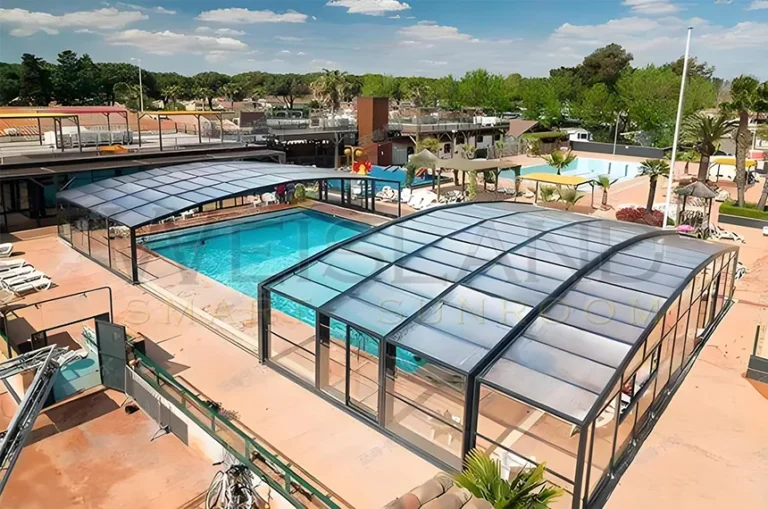
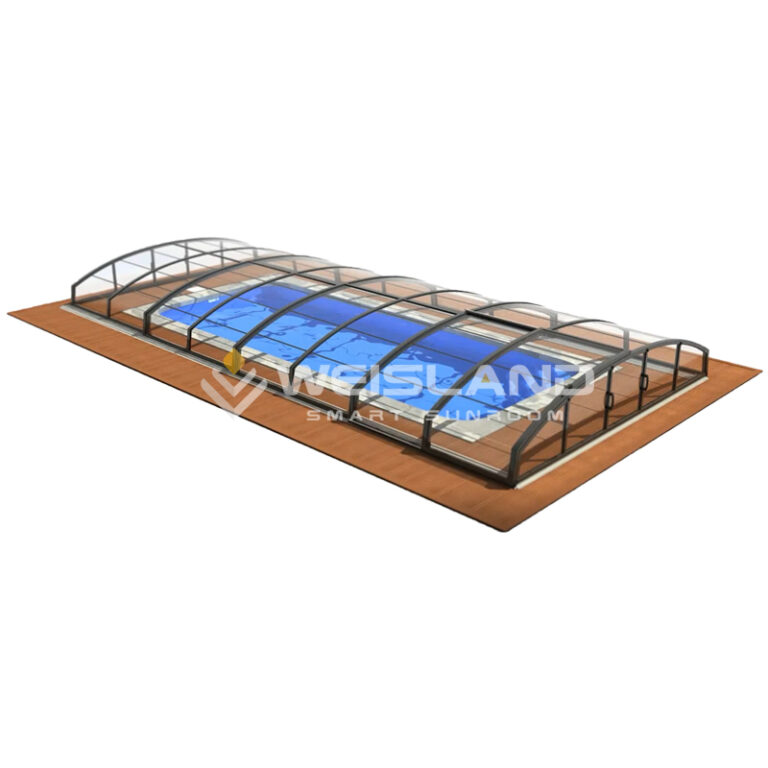
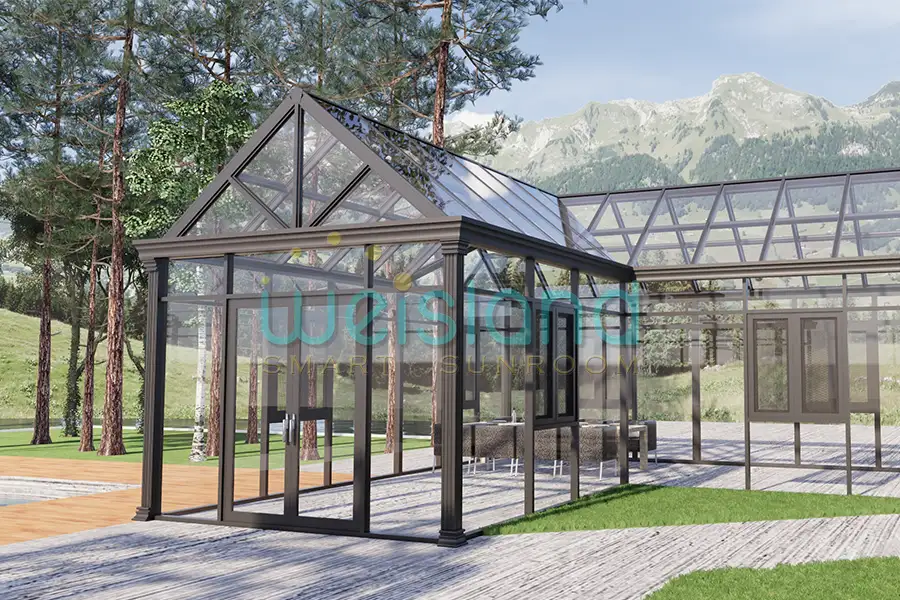
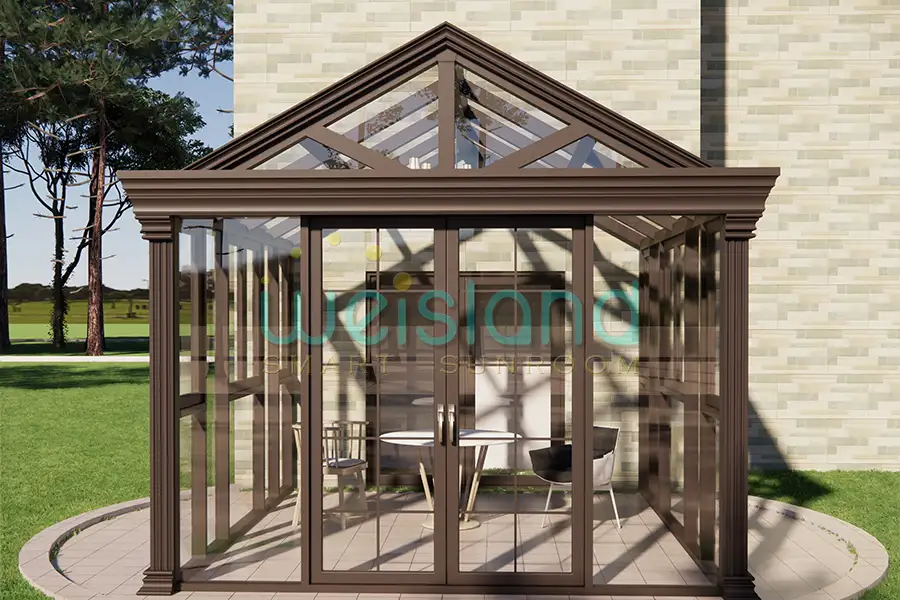
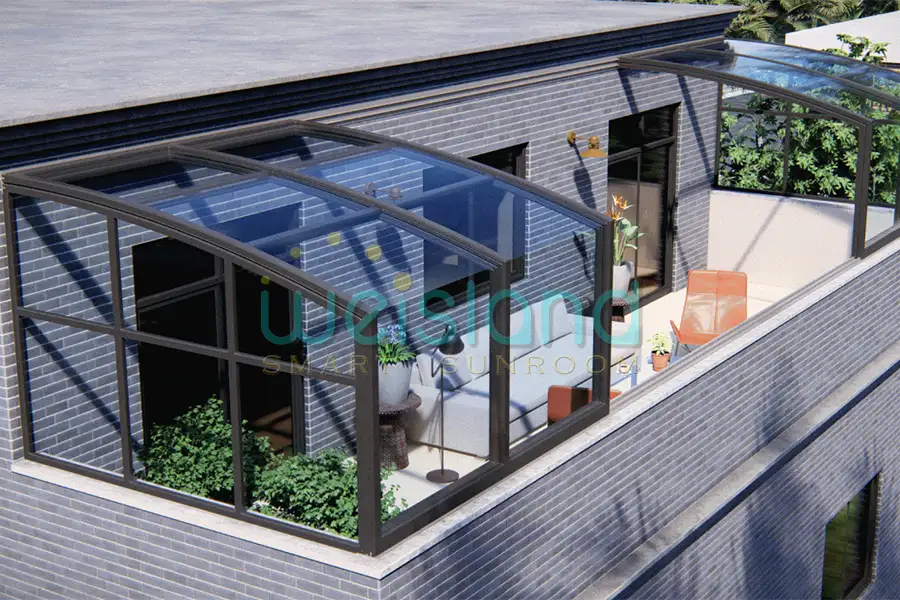
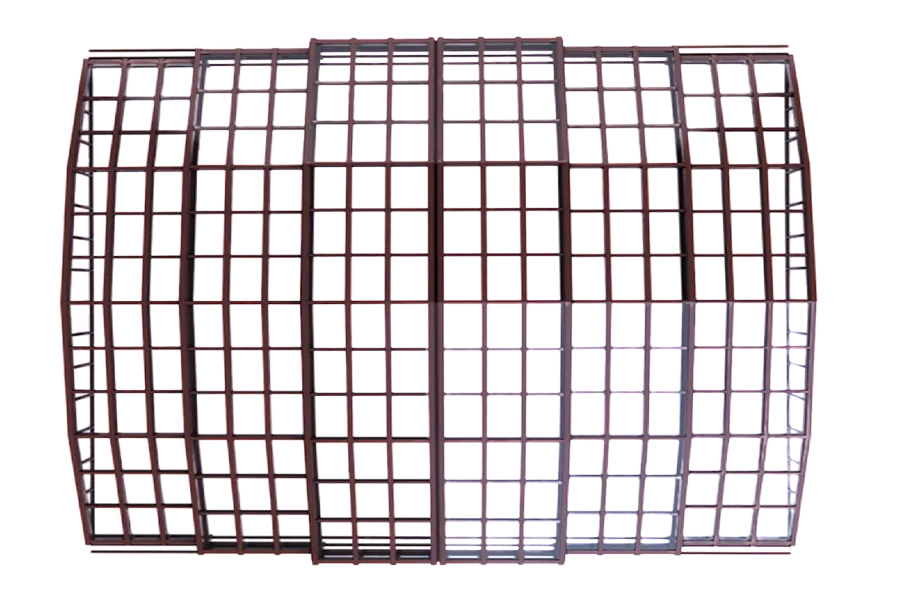
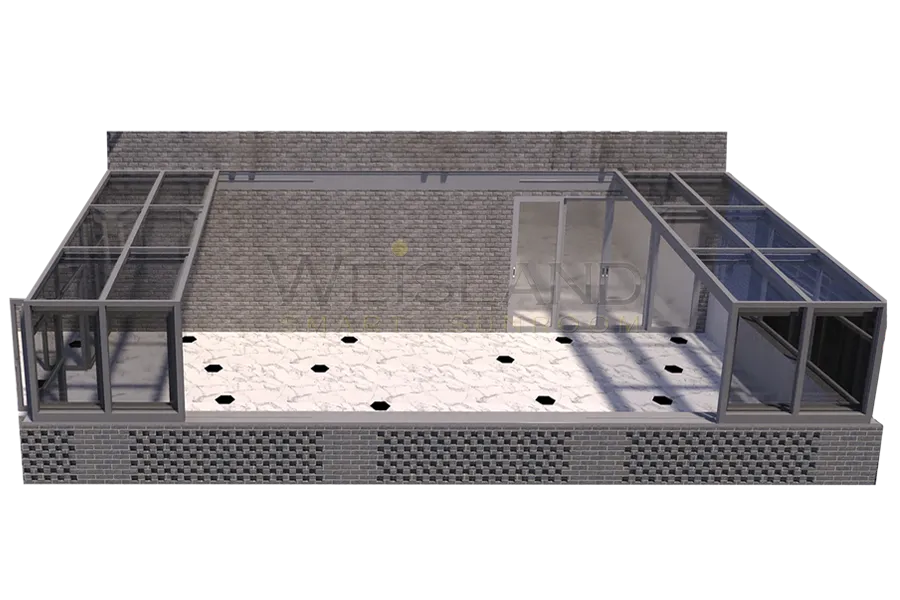
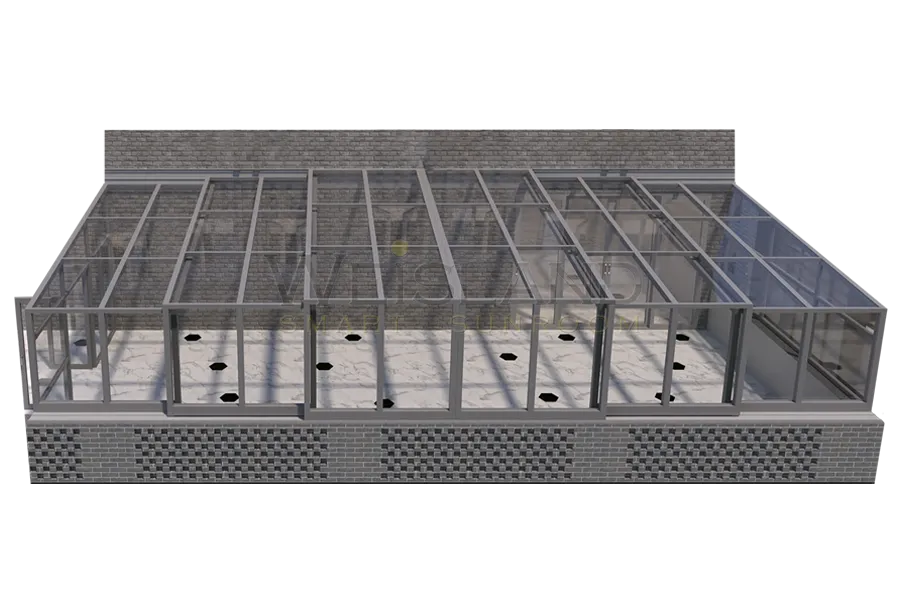
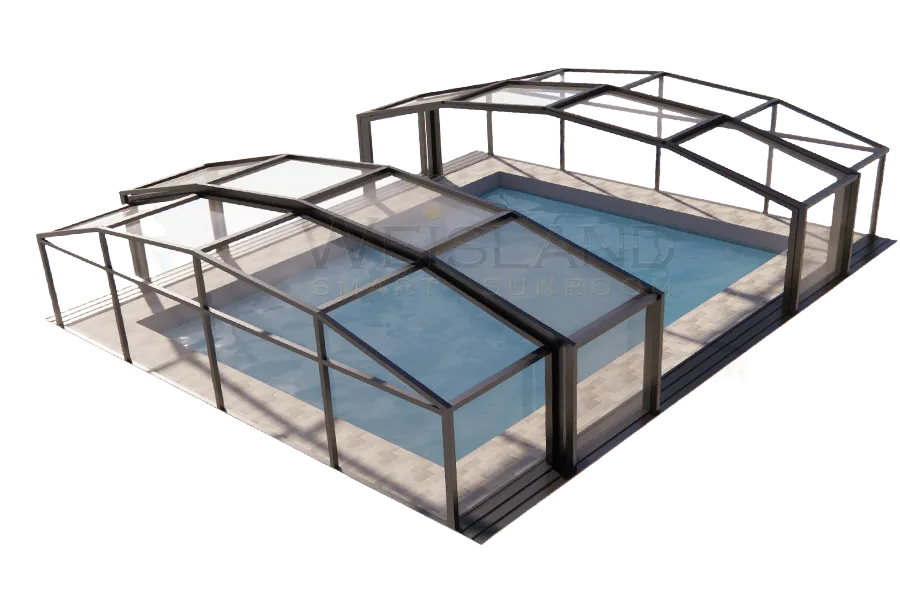
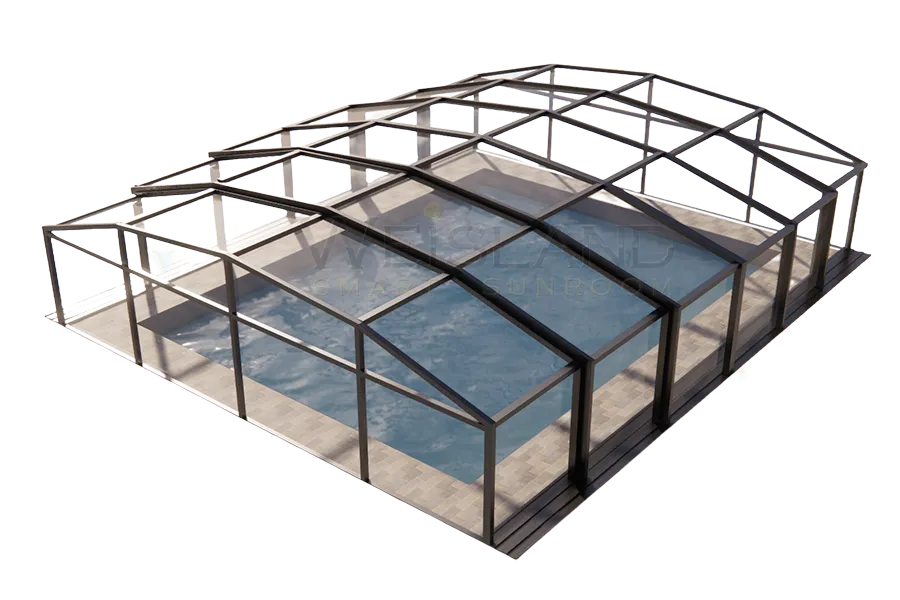
- A retractable hard enclosure is a low-profile or walk-in framed enclosure with transparent panels.
- A powered safety cover spans the water surface and may be tested to a safety-cover standard such as ASTM F1346.
- A screen enclosure helps keep out insects and debris but is not automatically a compliant pool barrier.
The decisive question is not “Does it close?” It is: Which barrier, shelter, or cover standard does the exact installed system satisfy where the pool is located?
Quick Decision Matrix
- France, retractable hard enclosure: A pool shelter can be one of the accepted safety-device categories when the exact shelter conforms to NF P90-309 and is installed accordingly.
- France, powered safety cover: A safety cover is a separate accepted device category and follows a different NF standard. Do not treat a hard shelter and a cover as interchangeable.
- United States, retractable hard enclosure: The powered-cover exception in 2024 ISPSC Section 305.1 does not automatically apply to a framed telescopic enclosure.
- United States, powered safety cover: In a jurisdiction that has adopted the relevant model-code provision, a powered safety cover complying with ASTM F1346 can provide a limited alternative pathway. Local adoption and amendments still control.
- New South Wales: A roof, weather enclosure, or cover does not by itself prove compliance with the required child-resistant barrier. Confirm the site-specific pathway with the council or certifier.
Pool type, construction date, state or municipality, local amendments, and installation details can change the answer.
France: A Certified Shelter Can Be the Safety Device
French government guidance requires private outdoor in-ground and semi-in-ground pools within its scope to have a standardized safety device. It lists four categories: barrier, alarm, safety cover, and shelter. A shelter conforming to NF P90-309 can serve as the selected safety device.
That does not mean every telescopic enclosure qualifies. As buyer due diligence, ask for the declaration or certificate that identifies the exact model and configuration, then ask the responsible local professional or authority to confirm that the proposed installation follows the relevant pathway.
The French government also warns that failure to install a required safety device can lead to a fine of up to €45,000. No device replaces responsible adult supervision.
Buyer takeaway: In France, obtain the NF P90-309 evidence for the exact shelter before relying on it as the selected safety device.
United States: Do Not Confuse a Hard Enclosure With an ASTM F1346 Cover
Section 305.1 of the 2024 International Swimming Pool and Spa Code states that areas with swimming pools equipped with a powered safety cover complying with ASTM F1346 are not required to comply with Sections 305.2 through 305.7. This is a narrow model-code provision for a powered safety cover. It is not automatic approval of a framed telescopic enclosure or screen cage.
The ISPSC is a model code. The state or municipality must adopt the applicable edition, and local amendments can change the result. The authority having jurisdiction decides what is accepted for the project.
Five Questions for the Local Official
- Which pool or building code edition applies at this address?
- Has Section 305.1 been adopted without a relevant amendment?
- What evidence is required for the exact product and configuration?
- Do the installation, controls, locking method, and clearances match that evidence?
- Are separate gates, alarms, or dwelling-door protections still required?
The U.S. Consumer Product Safety Commission’s residential pool-barrier guidance describes layers of protection. A 2025 CPSC recall involving a manual retractable pool cover also illustrates why the exact installation matters: an incorrectly installed cover could leave a dangerous gap and fail to conform to the voluntary standard. That recall does not establish that a hard enclosure is a safety cover.
Buyer takeaway: In the United States, ask the local official about the exact product, evidence, and installation. Do not use “enclosure” as shorthand for code acceptance.
New South Wales: Expect a Child-Resistant Barrier
The NSW Government states that pool owners must register their pool, comply with fencing laws, and maintain a child-resistant barrier complying with AS 1926. The obligation also reaches many portable pools capable of holding more than 30 cm of water.
The applicable pathway can depend on the pool’s age, location, and site conditions. Confirm the current requirements with the relevant council or accredited certifier instead of relying on a generalized barrier dimension.
A roof or weather enclosure may improve cleanliness, comfort, and access control, but those benefits do not by themselves prove that the system satisfies the child-resistant barrier requirement.
Buyer takeaway: In NSW, design the enclosure around the verified barrier pathway instead of assuming the enclosure removes it.
Five Due-Diligence Requests Before Buying
Ask the supplier and project team which of the following records are available and applicable. Availability will vary by product, configuration, and jurisdiction.
- Product identity: model, dimensions, panel type, frame system, and operating configuration.
- Safety evidence: any applicable certificate, listing, declaration, or test report for the exact configuration.
- Site design basis: the wind, snow, anchoring, drainage, and foundation assumptions used by the responsible project professional.
- Access details: doors, gates, locking hardware, controls, and emergency operation.
- Installation and maintenance records: available instructions, inspection points, maintenance requirements, and completion records.
A brochure statement such as “creates a safety barrier” is not a substitute for product-specific evidence and local acceptance.
The Specification Question That Prevents Expensive Mistakes
Identify the exact safety or barrier standard claimed for this configuration, provide the supporting document, and list the site conditions that could invalidate that claim.
That question separates three issues that are often blurred together: product capability, code acceptance, and site-specific engineering.
How to Compare Retractable Enclosures Safely
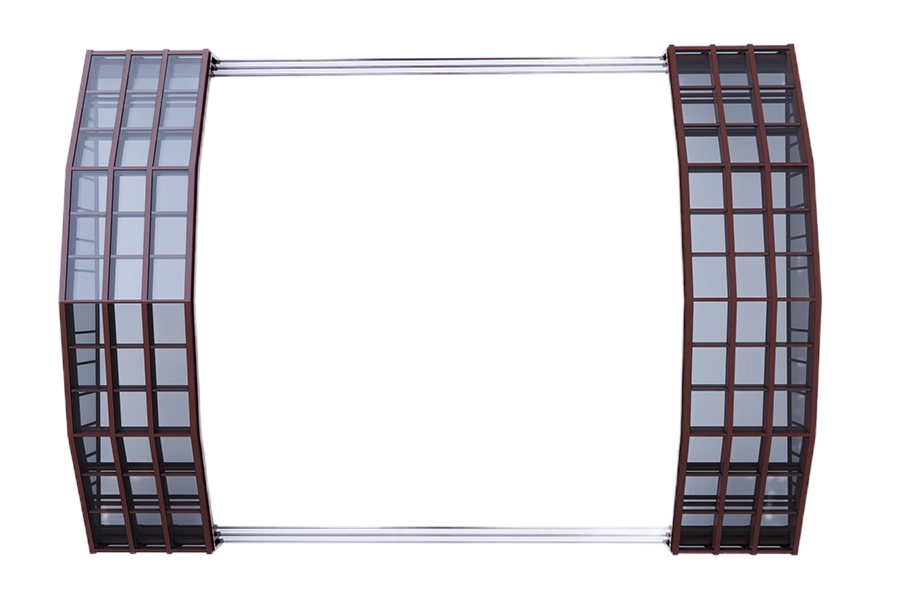
Once the compliance pathway is clear, compare the enclosure as an operating system. Review clear span, stacking space, track or wheel arrangement, panel movement, ventilation, condensation control, design assumptions, emergency manual operation, corrosion protection, and replacement-part availability.
The open and closed states can create different operating conditions. The project team should review both. A low-profile enclosure can reduce visual impact, while a walk-in enclosure can extend the usable season, but neither geometry proves barrier compliance.
WeislandSunroom manufactures custom retractable pool enclosure systems. We can provide available product and configuration information for review by the project’s local professionals and authorities. Those professionals and authorities determine the applicable code and whether the proposed installation is accepted.
Explore our retractable pool enclosure systems, or share the pool dimensions and project location so we can prepare the available product information for your local review process.
Sources and Review Date
- French government pool-safety guidance, reviewed September 8, 2026.
- International Code Council, 2024 ISPSC Chapter 3, reviewed September 8, 2026.
- U.S. CPSC Safety Barrier Guidelines for Home Pools, reviewed September 8, 2026.
- U.S. CPSC 2025 retractable-cover recall, reviewed September 8, 2026.
- NSW Government owner obligations, updated March 16, 2026 and reviewed September 8, 2026.
Regulations and local interpretations change. Confirm the current rule with the authority having jurisdiction before design, purchase, or installation.